- Home
- Curriculum
- PSHE and RSE
Jesus said: “love your neighbour as yourself” ~ Mark 12:31
PSHE lessons strive to fulfil our school mission by providing a knowledge rich PSHE curriculum which has Catholic education at its heart. Our curriculum has been designed to allow our students to flourish into best version of themselves. Lessons allow students to demonstrate our key values of love, hope, faith, respect and community as these naturally intertwine when discussing themes that can affect both ourselves and our whole school community during our lives.
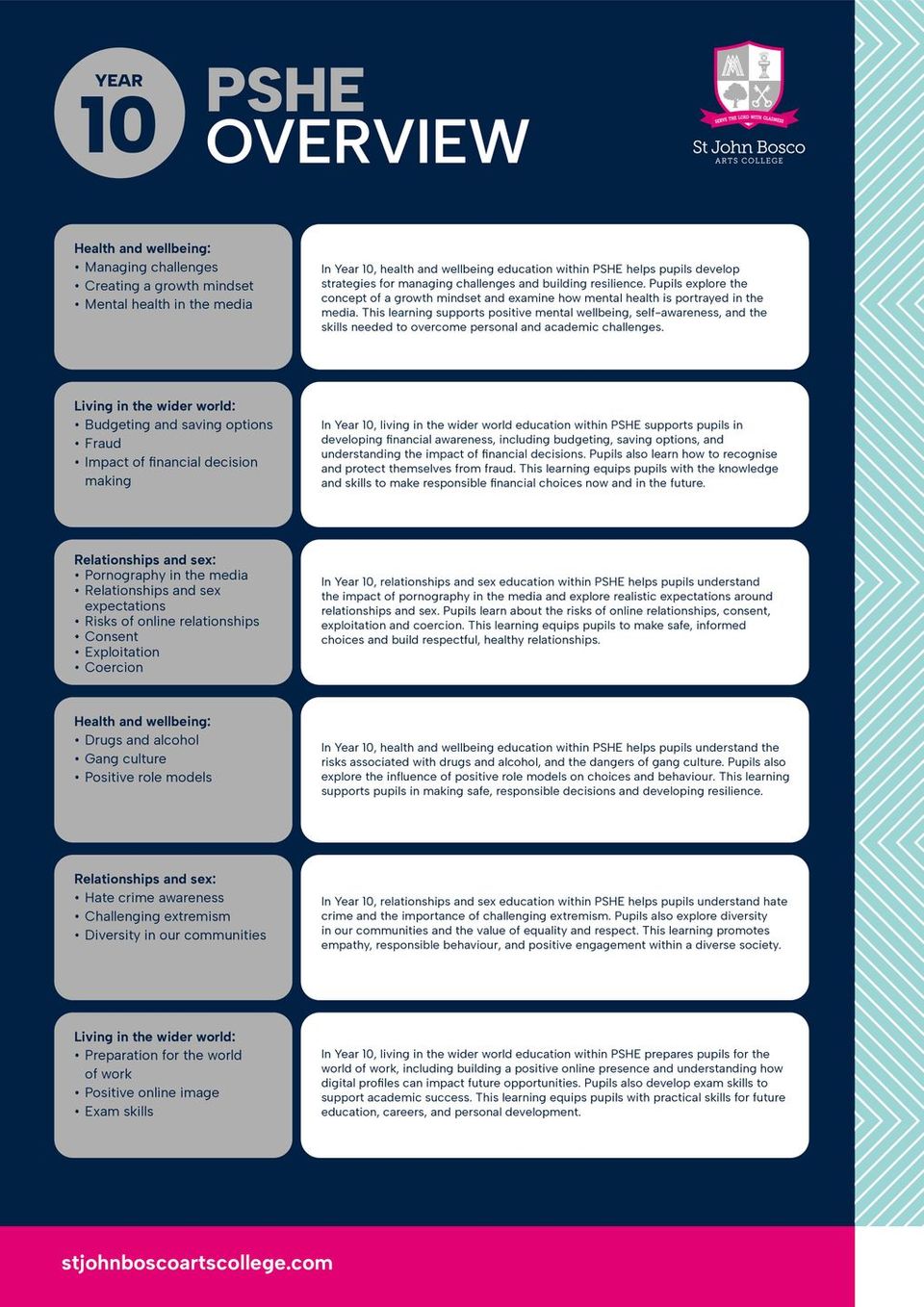
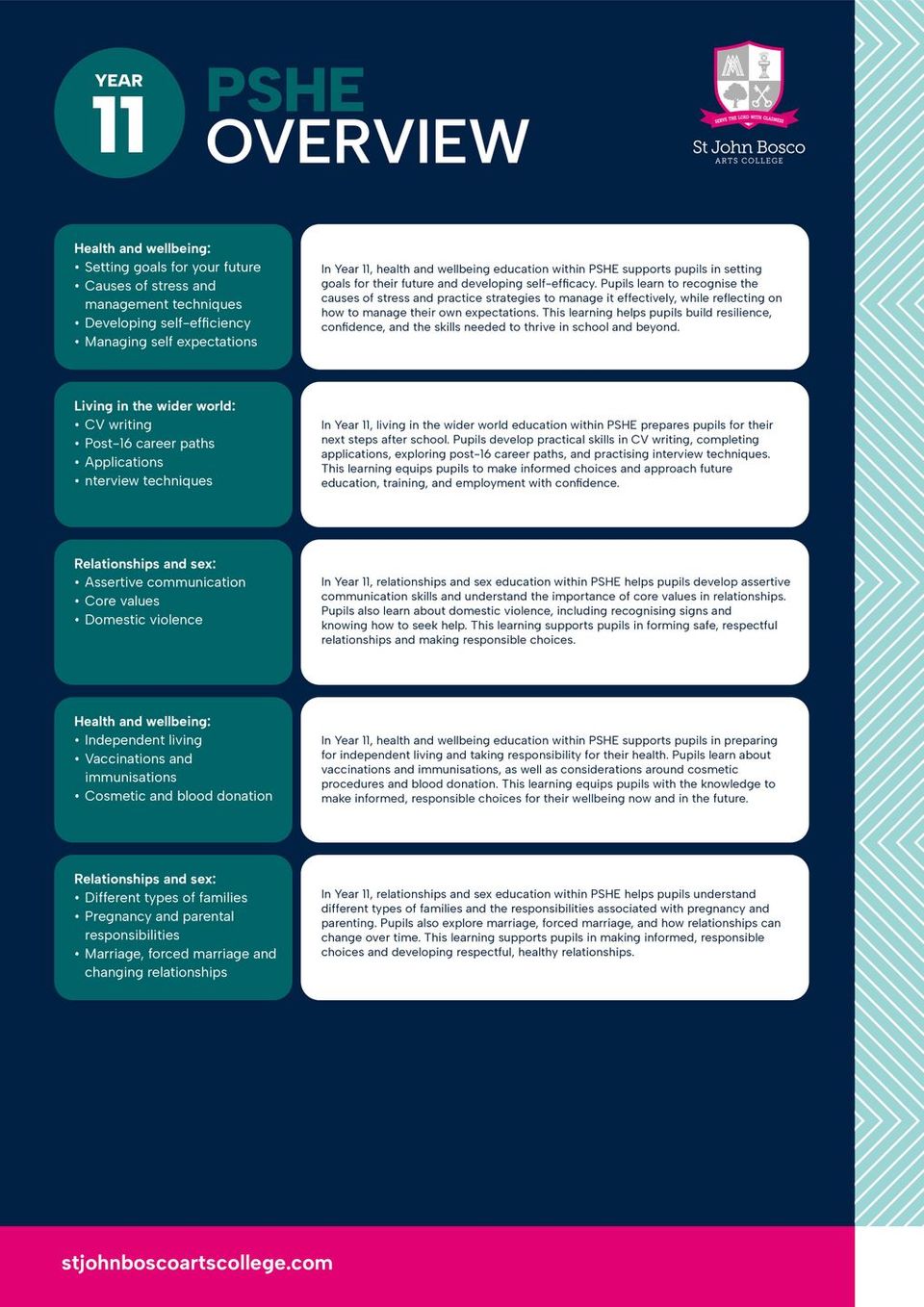
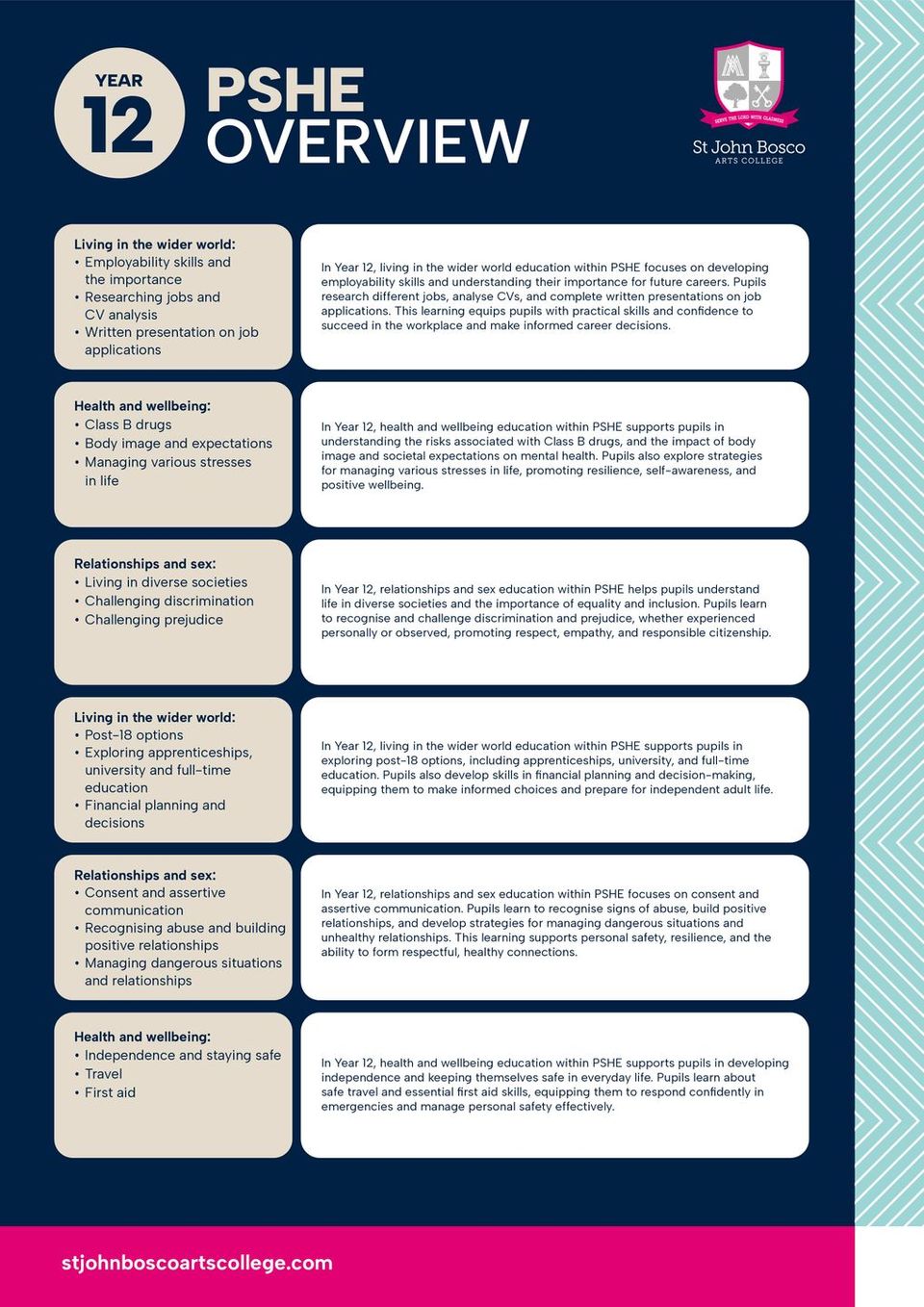
PSHE education at St John Bosco is a core element of the school’s curriculum and reflects our commitment to the holistic development of pupils, in accordance with our Catholic ethos. The programme supports pupils’ personal, social, moral and emotional development, enabling them to become responsible, respectful and informed members of society.
PSHE education provides pupils with the knowledge, skills and understanding required to manage relationships, maintain physical and mental wellbeing, assess risk and make safe, informed decisions. Teaching is underpinned by respect for human dignity, equality and mutual respect.
A Department for Education evidence review recognises that high-quality PSHE education can improve pupils’ physical and psychosocial wellbeing and has a positive impact on academic achievement, creating a virtuous cycle of wellbeing and success.
The school adopts a flexible and inclusive approach to PSHE delivery, ensuring content is age-appropriate, responsive to pupils’ needs and compliant with statutory guidance. Through PSHE, St John Bosco aims to prepare pupils for the responsibilities and experiences of adult life, enabling them to flourish academically, socially and morally.
Relationships and Sex Education(RSE) at St John Bosco Arts College aims to provide young people with the knowledge and skills they need to deliver caring and positive relationships of all types, not only intimate relationships within the context of the Catholic faith and the wider world. Students will develop an understanding of what constitutes a healthy relationship, considering the qualities of a good friend, classmate or co-worker, and life partner whether in a successful marriage or any other form of stable relationship and exploring what constitutes acceptable and unacceptable behaviour in relationships.
RSE content builds on the foundation of what is taught in primary school. Although teaching is extended to include intimate relationships, students also continue to learn about family life, friendships and other relationships that form part of fulfilling and positive adult life. We aim to develop personal attributes through RSE such as honesty, integrity, trustworthiness and kindness, underpinned by an understanding of self-respect and self-worth. This allows students to make decisions for themselves about how to live their own lives, whilst respecting the right of others to make their own decisions and hold their own beliefs including around sexuality and gender orientation.
RSE also plays an essential role in the safeguarding of our students by supporting students to recognise when different types of relationships are unhealthy or abusive and strategies to manage this or access support for oneself or others at risk. Students are taught that unhealthy relationships can have a lasting, negative impact on mental wellbeing as well as the rules and principles for keeping safe, both in real-world interactions and online.
RSE is explicitly delivered through discrete PSHE lessons, with themes consolidated across different curriculum areas in school. All staff have a part to play in the holistic development of our young people, and the attributes of kindness, generosity and tolerance are modelled on a daily basis.
Parents/carers have the right to request that their child be withdrawn from some or all of the sex education delivered as part of statutory Relationships and Sex Education (RSE) in secondary school.
This right applies only to the sex education content; parents/carers cannot withdraw their child from:
Relationships education
Health education
Science curriculum, which includes teaching about human reproduction
Requests to withdraw should be made in writing to the Headteacher. A discussion will then take place to ensure parents understand the content and purpose of the lessons, and to consider the impact of withdrawal on the student.
Once a child reaches the age of 16, they have the legal right to decide for themselves whether to receive sex education, even if parents have previously requested withdrawal.
The school will keep a record of all withdrawal requests and outcomes.
Year 10 | Year 11 |
 |  |
Year 12 | Year 13 |
 | 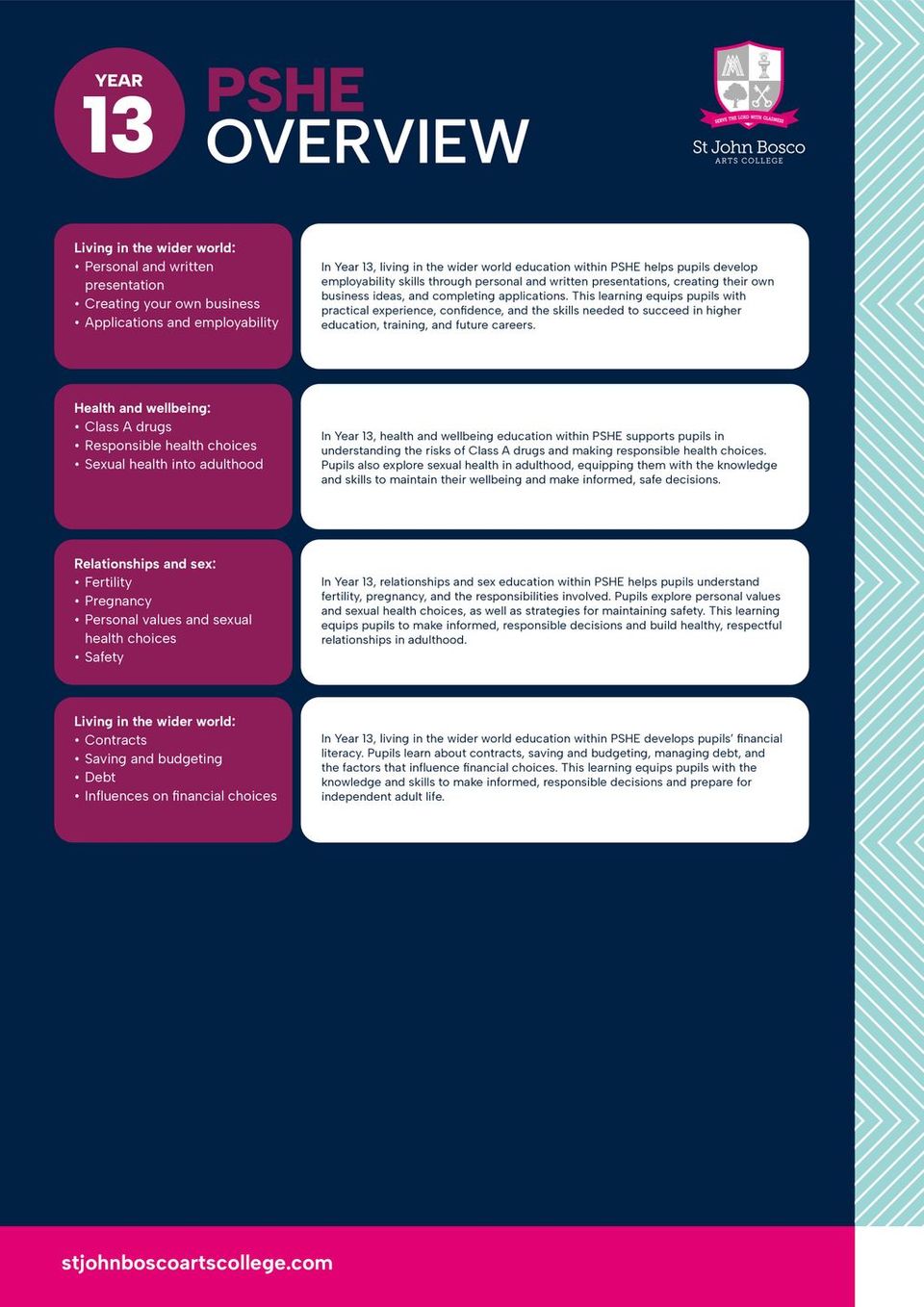 |
Year 7 | Year 8 | Year 9 |
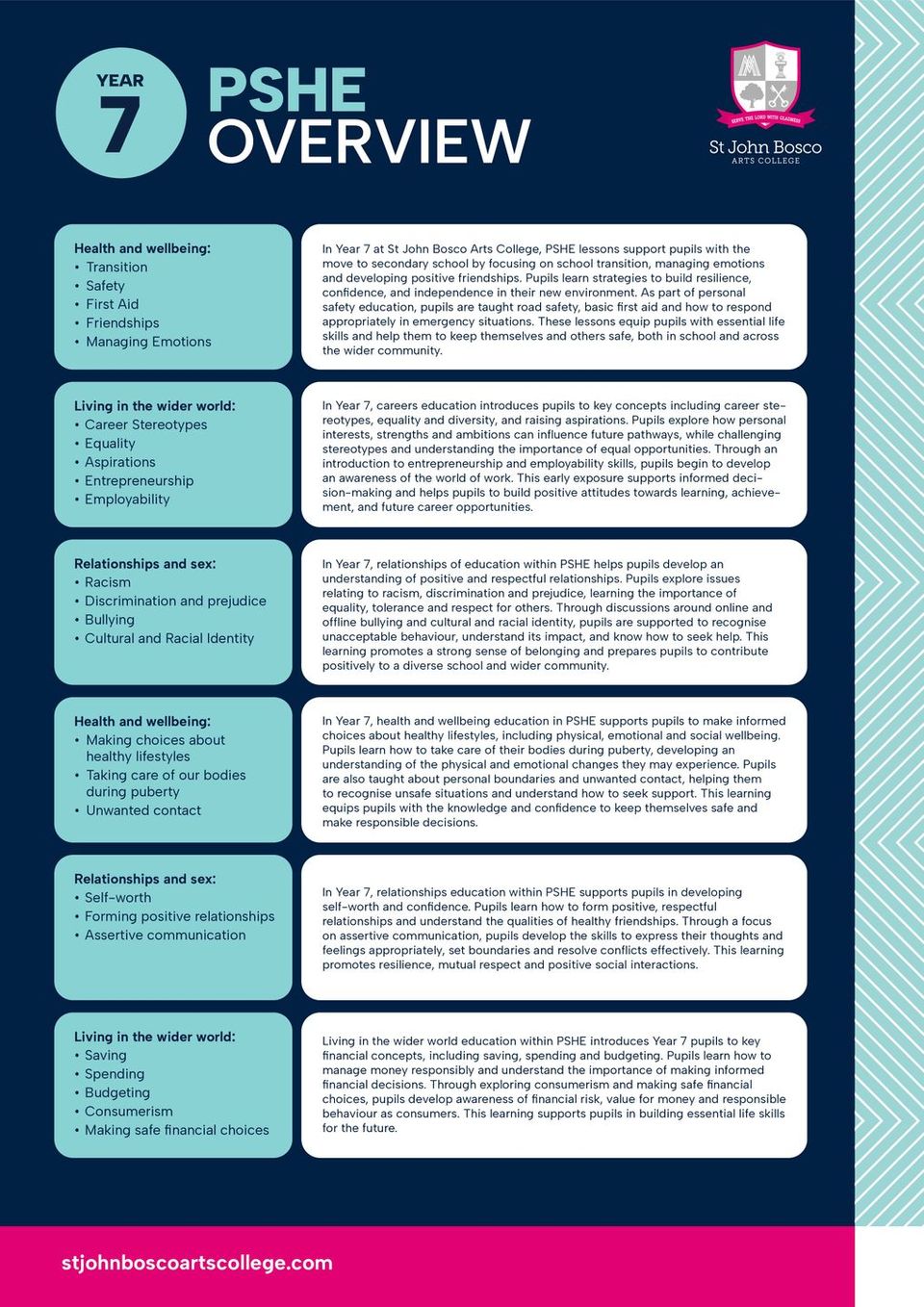 | 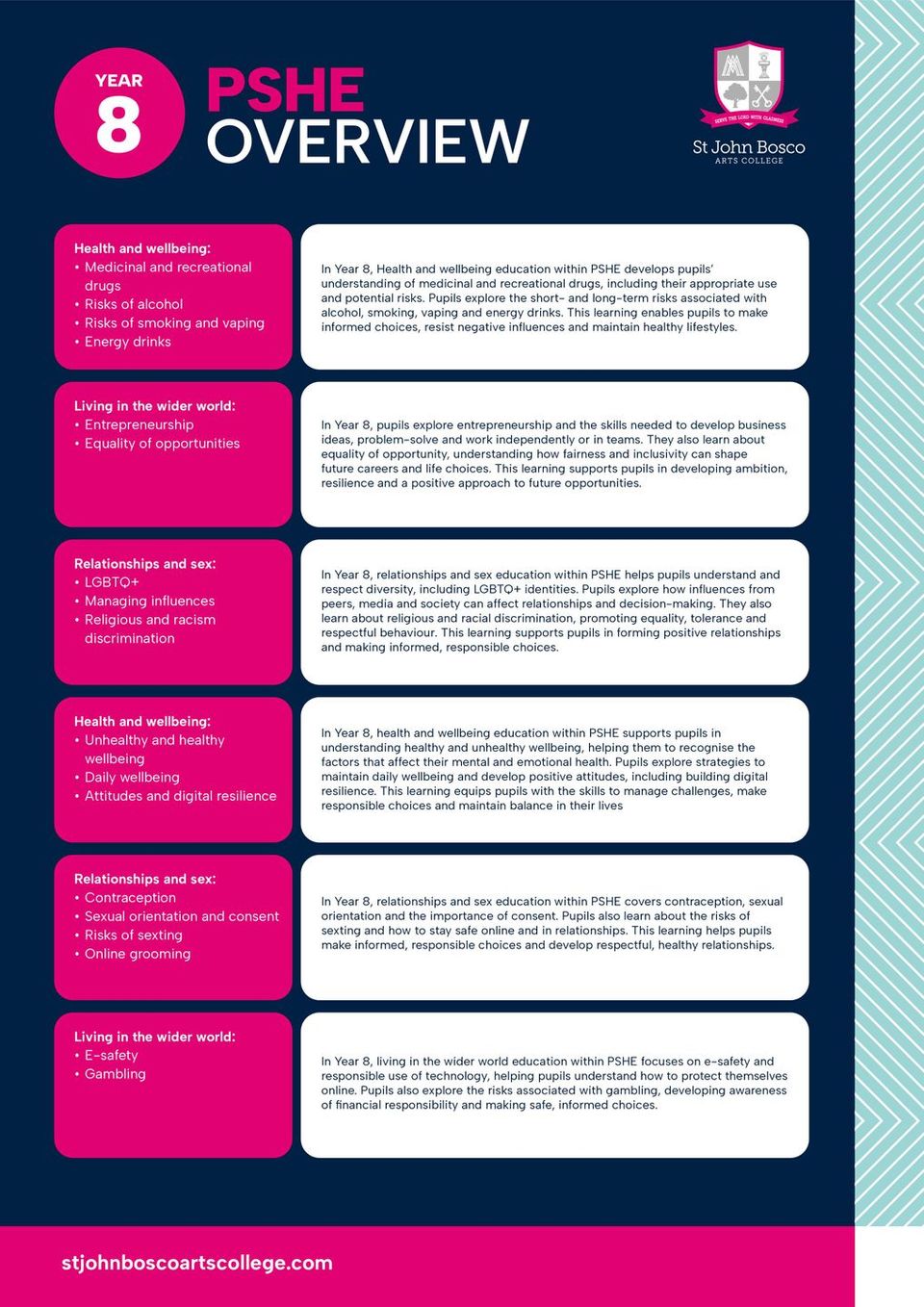 | 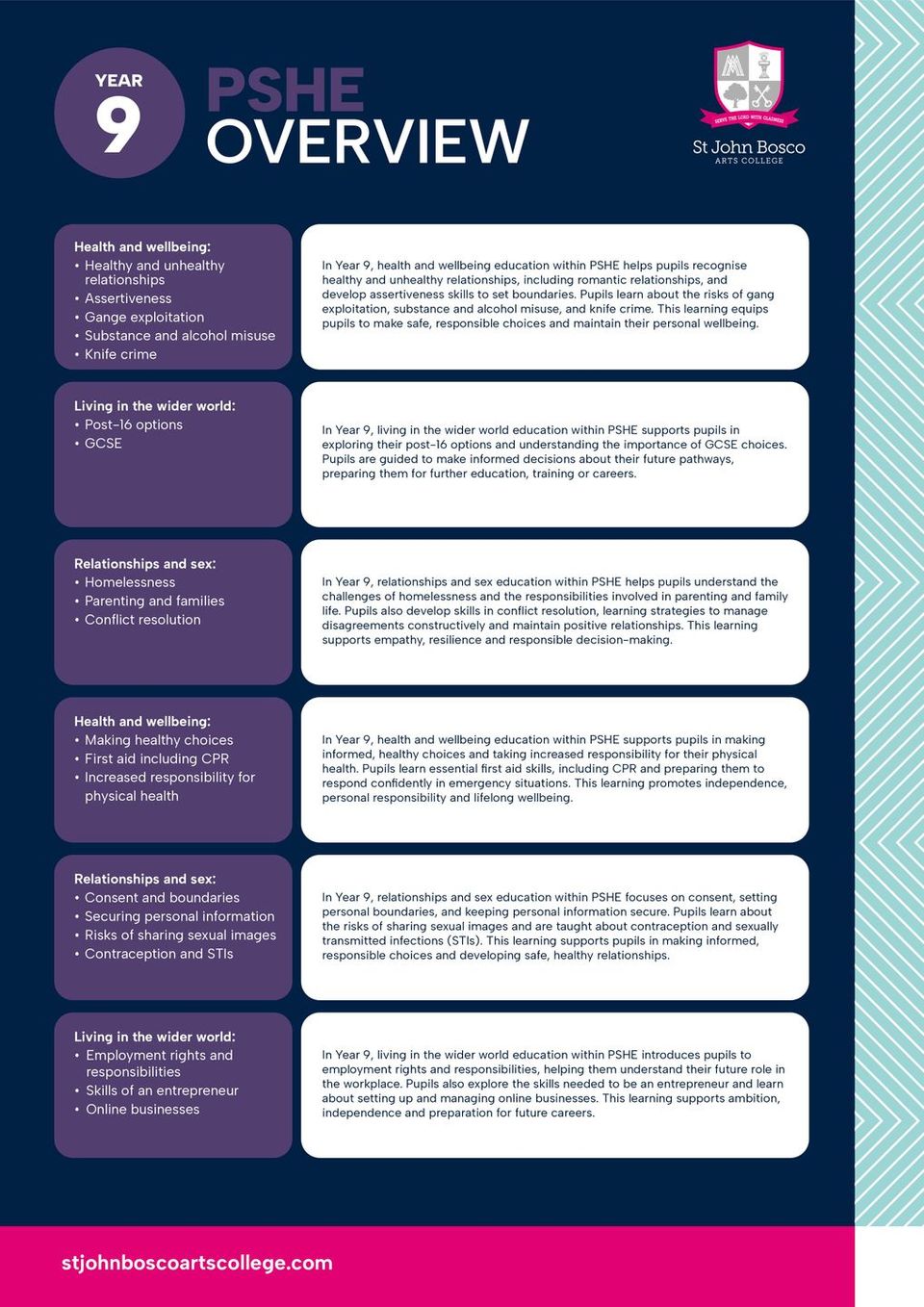 |
We encourage students to become involved in our many extra-curricular activities that are run through PSHE, such as Diversity club, mentoring, creativity projects with outside agencies, and finance workshops. We are open to listening to student voice, therefore if students would like additional clubs and workshops, we are happy to run them on a theme relating to PSHE where there is demand for this in school. Please speak to Mrs Barclay to discuss this.
This site uses cookies that enable us to make improvements, provide relevant content, and for analytics purposes. For more details, see our Cookie Policy. By clicking Accept, you consent to our use of cookies.